
Processing the Epstein Files with Wisdom and Restraint
How Christians can pursue truth without surrendering to outrage, rumor, or exploitation.

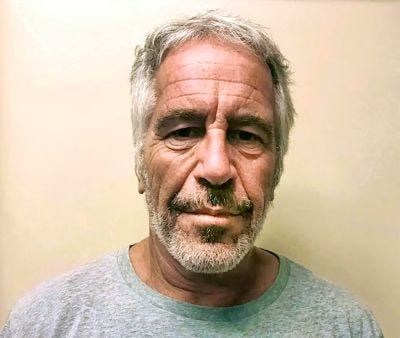
There are moments when the news itself feels weighty enough to change how we breathe. The release of information connected to the Epstein files has landed that way for many of us. It confronts us with allegations of exploitation, abuse, and the misuse of power, and it asks something of us that goes beyond outrage or curiosity.
I have felt it myself these past few days, that uneasy mix of anger, grief, and urgency that arises when deeply disturbing information enters the public square. The instinct to demand answers immediately is understandable. The harder work is discerning whether that instinct is drawing us toward justice, or merely toward emotional release, or, if I may be blunt, toward sin of our own.
The content being fed to us spoonful by spoonful is disturbing. The power dynamics are sickening. The harm done to vulnerable people is real, and it should never be minimized or brushed aside.
At the same time, the way information now travels through our digital bloodstream makes it very easy for seriousness to turn into spectacle. What should be handled with care becomes content to be pushed. What should call us to justice becomes fuel for clicks, outrage, and tribal signaling.
I have spoken with parishioners, friends, and readers who feel torn right now. They want accountability. They want truth. They want protection for victims. And I agree, but I also feel uneasy about the frenzy, the memes, the half-claims, and the way certainty is being manufactured before facts are established.
So, the question before us is not whether this information matters. It does.
The question is how we process it with spiritual and intellectual maturity… and whether we are willing to resist the forces that want to profit from our anger.
Reflection
Scripture never asks us to look away from injustice. In fact, it demands the opposite.
“Woe to those who decree iniquitous decrees,” the prophet Isaiah warns, “and keep writing oppression” (Isaiah 10:1).
Truth matters. Accountability matters. The vulnerable matter.
But Scripture also warns us about false witness, reckless speech, and the intoxication of outrage. “You shall not bear false witness against your neighbor” (Exodus 20:16) is not only about lying outright. It is about resisting the urge to fill in gaps with imagination, suspicion, or certainty we have not earned.
Justice seeks truth, due process, and proportion.
Mob justice seeks release, domination, and emotional satisfaction.
Justice is slow, often frustratingly so. It requires evidence, corroboration, and restraint.
Mob justice is fast. It feels righteous. It thrives on absolutes and demands immediate moral closure.
Jesus himself was subjected to mob justice. Accusations multiplied. Truth was irrelevant. Fear and power did the deciding. That alone should make Christians deeply cautious about participating in public frenzies that confuse accusation with proof.
I will be honest with you. As a priest, I feel the pull of anger too. When stories of exploitation surface, especially involving children, something in me wants names, consequences, and resolution now. That desire is human. But discipleship asks more of us than instinct.
Jesus tells us, “By your words you will be justified, and by your words you will be condemned” (Matthew 12:37). The way we speak about evil matters almost as much as our willingness to oppose it.
One of the great spiritual dangers of this moment is manipulation. Media outlets, blogs, and influencers know exactly how to frame information to monetize outrage. Vague language, suggestive headlines, selective screenshots, and “just asking questions” rhetoric are not neutral. They are designed to hijack your nervous system and turn your moral concern into engagement metrics.
When you feel your heart racing, your certainty hardening, or your compassion narrowing, that is a sign to pause. Not because injustice is unreal, but because someone may be trying to use your moral instincts for profit.
Call to Faithful Action
So what does faithfulness look like right now?
It looks like discussing the abuses seriously without turning them into entertainment.
It looks like refusing to share unverified claims, even when they align with our suspicions.
It looks like advocating for victims while resisting the urge to become judge, jury, and executioner from behind a screen.
Christians are called to be people of truth and people of restraint. We reject false gospels that promise righteousness through rage or salvation through exposure alone. The Gospel calls us to something harder and holier… steady hearts, clear minds, and courage that does not collapse into cruelty. So here are some tips for processing this information that I think may be beneficial for all of us to remember:
Five Practices for Processing This Moment with Spiritual Maturity
1. Slow the intake before forming conclusions.
Not every document, screenshot, or headline deserves immediate interpretation. Spiritually mature people resist the pressure to decide instantly. Truth is not afraid of time. If something is true, it will still be true tomorrow, and next week, and after proper investigation.
2. Distinguish allegations, evidence, and conclusions.
One of the most common moral failures in moments like this is collapsing these categories into one. Allegations are not proof. Proof still requires context. Conclusions demand restraint. Scripture’s call to truthfulness includes the discipline of precision in our thinking and speech.
3. Guard against media that profits from your outrage.
If a piece of content is designed to spike your anger, fear, or sense of secret knowledge, pause. Ask who benefits from your emotional reaction. Journalism serves the common good. Manipulation serves clicks, ad revenue, and influence. Jesus warns us to be “wise as serpents and innocent as doves” (Matthew 10:16), especially in how we consume information.
4. Center concern for victims, not fascination with perpetrators.
Spiritual maturity shows itself in where our attention lingers. Are we focused on justice, healing, and protection for the vulnerable, or are we feeding a voyeuristic hunger for names, scandal, and downfall? The Gospel consistently draws our eyes toward those who were harmed, not toward the spectacle of power exposed.
5. Examine what this content is doing to your heart.
Anger can be righteous, but it can also become corrosive. If you notice yourself growing harsher, more cynical, or more eager to condemn than to seek truth, that is not vigilance, it is a warning light. “Above all else, guard your heart,” Proverbs tells us, “for everything you do flows from it” (Proverbs 4:23).
When Truth Is Mixed with Lies
One of the most spiritually dangerous dynamics in moments like this is not outright falsehood, but truth blended with rumor, speculation, and hearsay. A few verified facts are introduced, and then layered with assumptions, suggestions, and unnamed sources until the line between what is known and what is imagined becomes nearly impossible to see.
This is how otherwise reasonable people are drawn into error. When something contains truth, we are far more likely to suspend our discernment. We tell ourselves that because part of the story is real, the rest must be close enough.
Truth does not need exaggeration to be compelling, and justice does not require rumor to move forward.
The Apostle Paul cautions the early Church to avoid “godless chatter and contradictions of what is falsely called knowledge” (1 Timothy 6:20). Sensational claims travel faster than careful reporting. Suspicion feels like insight. Repetition begins to masquerade as proof.
Spiritually mature people learn to ask a harder question than “Could this be true?” They ask, “Do I actually know this to be true?” They recognize that passing along unverified claims, even with good intentions, can become a form of bearing false witness.
There is also a quieter danger here. When truth is mixed with lies, it does not only misinform us, it reshapes us. It trains our minds toward suspicion, our hearts toward cynicism, and our spiritual lives toward fear rather than trust. Over time, that posture erodes our capacity for charity, humility, and hope.
The Gospel calls us to something better. Jesus names Himself as the Truth, not a half-truth, not a suggestive implication, not a rumor amplified by outrage. Following Him means refusing shortcuts that promise clarity at the expense of integrity.
Conclusion
If we are going to speak, let us speak carefully.
If we are going to act, let us act justly.
And if we are going to demand accountability, let us do so in a way that reflects the character of Christ, not the algorithms of the age.
Closing Prayer
God of truth and mercy,
we bring before You the weight of what has been revealed and the suffering it represents.
You see what has been hidden.
You know the harm done in secret.
You hear the cries that power tried to silence.
Give comfort and healing to those who were exploited, abused, or discarded.
Surround them with protection, dignity, and justice that restores rather than wounds again.
Guard our hearts, O Lord, in a world that profits from outrage.
Slow our tongues when we are tempted to speculate.
Steady our minds when fear and anger demand certainty without wisdom.
Teach us the difference between justice and vengeance, between truth-seeking and spectacle.
Make us people who hunger for righteousness without losing our humanity.
May our words reflect Your light.
May our actions serve Your truth.
And may we never forget that even in darkness,
You call us to walk as children of the day.
Amen.
If this reflection met you where you are, I’d be grateful if you’d let me know.
Leaving a comment, clicking like, or restacking this piece may feel small, but for an independent ministry like this one, it matters more than you might realize. Those simple acts help this work reach people who are quietly searching for something steadier than outrage.
More importantly, I’d genuinely like to hear from you.
How are you feeling in this moment?
What has stirred in you as you’ve tried to take all of this in?
Is there something you’re struggling to name, or a question you’re carrying?
If there’s something you need prayer for, or if there’s a way I can serve you through this ministry, please say so. I read the comments. I respond. This is not content shouted into the void, it’s a conversation, and you’re part of it.
Thank you for walking this road thoughtfully, and for choosing discernment when the world keeps pushing us toward noise.
With gratitude and prayer,
Father Rich
Thank you Father Rich. We talk in my line of work (hospital healthcare) about moral distress, moral exhaustion and moral jeopardy. The continuous onslaught of information and situations that, rightly so, ignite our empathetic response can be overwhelming. Your words are so important to use as a framework to remain grounded.